

1950s-1970s
E. Nelson Bridwell
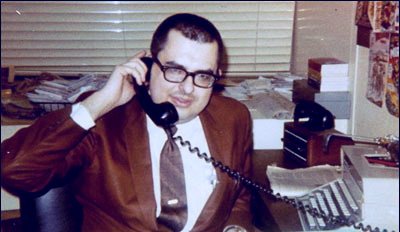
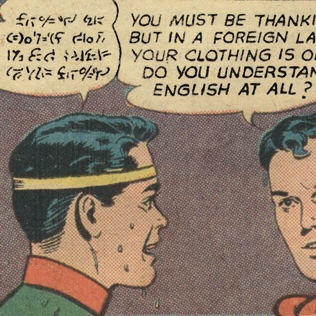
The story of the Kryptonian Languages begins with E. Nelson Bridwell, a meticulous editor and writer who began working at DC Comics in 1965 and whose love of DC minutiae was legendary. Kryptonian in the comics at the time was represented by squiggled doodles artists used to mimic writing which that looked vaguely foreign and unintelligible. For years Bridwell fielded fan letters proposing Kryptonian “alphabets” with fans proposing, essentially, their own cipher fonts — 26 letters mapped to the characters A-Z. Hoping to stop the flood, he answered a letter in a Superman letters column with a throwaway “fact”: Krypton has 118 letters and words longer than supercalifragilisticexpialidocious.
That offhand quip backfired with fans sending in 118 squiggles instead.
At some point, Bridwell turned the joke into work. He combed old Superman stories, harvesting the random Kryptonian doodles letterers had sprinkled into panels. From those, he finagled out 118 distinct symbols (to honor his now-published “fact”) and assigned phonetic values — including many impractical consonant clusters — and also defined numerals. He’d created the first standardized set of Kryptonian signs in DC history. But it was still a script without a language: no phonology beyond assigned readings, no grammar, no lexicon. More critically, this alphabet was just his own musing, and saw no actual publication.
1978
Superman: The Movie
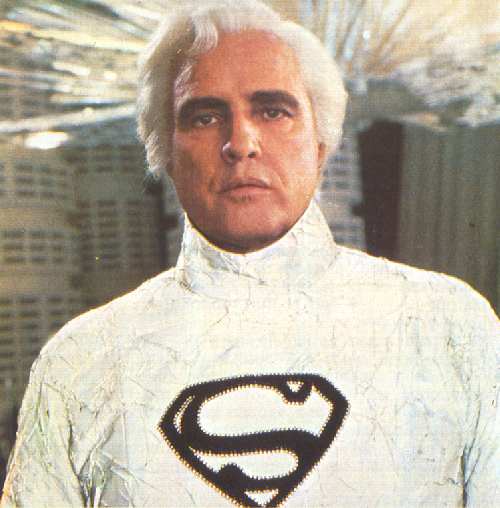
In 1978, Richard Donner’s classic Superman film was released starring Marlon Brando as Superman’s father, Jor-El. Brando, at the height of his fame, and famously difficult to work with, had many demands in addition to his exorbitant salary in order to play the role. One of these was that he wanted to wear the S-shield himself — making it into a family crest rather than just the homemade initial it had been previously. Thus, Superman canon was permanently changed, tying the iconic S-shield, and thus the character himself, much more tightly back to his Kryptonian heritage.
1986
John Byrne
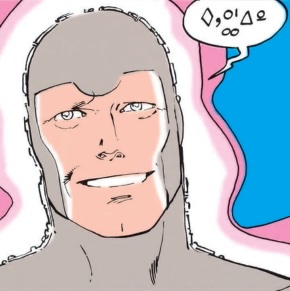
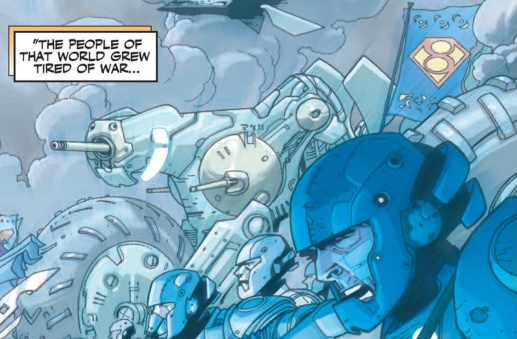
After DC’s franchise reboot Crisis on Infinite Earths, John Byrne headed up Superman projects including The Man of Steel in 1986. To depict Kryptonian, Byrne departed from the previous era’s aesthetic of intricate squiggles, opting instead for a more geometric look — triangles, circles, dots. This was still just artists rendering meaningless doodles in the place of language, but the whole aesthetic was completely different to match John Byrnes new take on the Krypton mythos.
1987
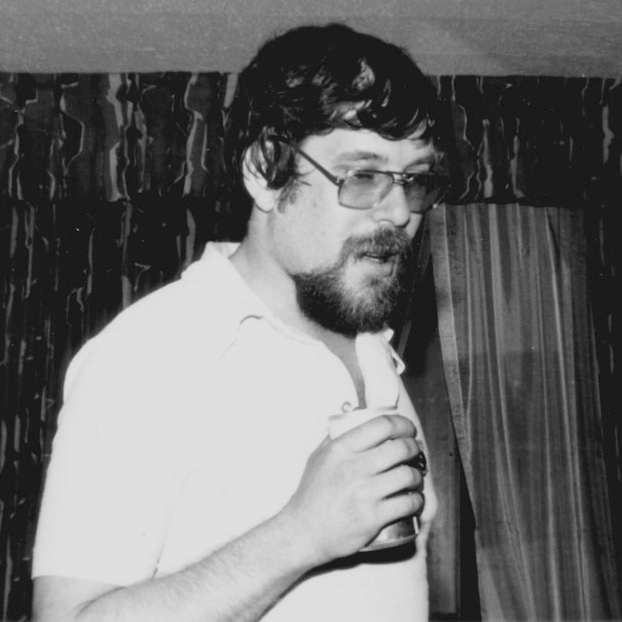
Al Turniansky
In 1987, Bridwell tragically passed away from lung cancer at the age of 55 with his alphabet still only existing as unseen personal notes. After his passing, Al Turniansky, Rich Morrissey, and a few other comics fans helped Bridwell’s family go through his apartment. Bridwell’s notes on the Kryptonian alphabet were found among the belongs, and Turniansky was able to get a photocopy.
1990s
Bridwell’s Alphabet
supermanOrthography
ALPHABET:
- 118 characters
- 10 digits
- Basic punctuation
Language
NONE
Bridwell’s Font Surfaces
Recognizing the significance of the notes in his possession, Al Turniansky at some point turned Bridwell’s handwritten alphabet into a bitmap font on his Mac. Eventually he shared this font on website via low-resolution screen shots of the font itself on a chart along with the phoneme assignment. In addition to the letters and numbers, Turniansky had added several punctuation characters and teased grammar and vocabulary. However, aside from the single, untranslated phrase appearing at the top of his page — “hlērwāgāts sfawkrĬptän” — nothing more was ever published before his death in 2008. His online posts were preserved at SupermanThroughTheAges.com and then later in the Bridwell section here.
2000
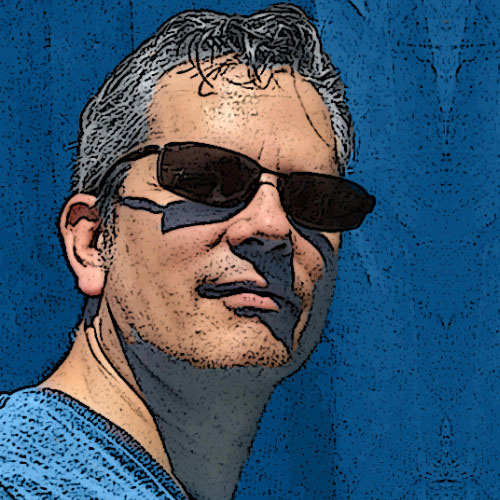
Brewer’s Cipher
supermanOrthography
CIPHER FONT:
- 26 characters
- A-Z mapping
- 10 digits
- Basic punctuation
Language
NONE
Georg Brewer
In 2000, DC’s Design Director Georg Brewer (with input from the Superman office) delivered a true Kryptonian cipher font. It mapped the Roman alphabet (without upper or lower case distinction) to new glyphs matching Byrne’s geometric aesthetic. The goal was practical: a consistent, usable way to dress comics, covers, products, and signage with consistent — and readable — Kryptonian that any artist or licensee could set. It wasn’t a new language (just “English in Kryptonian clothes”), but it was the first system that readers could reliably decode, and a massive leap in consistency.
2002
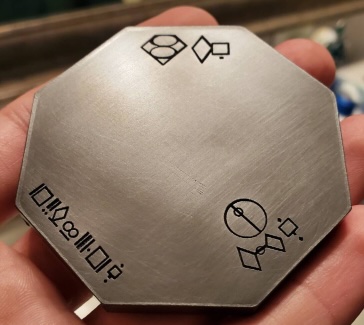
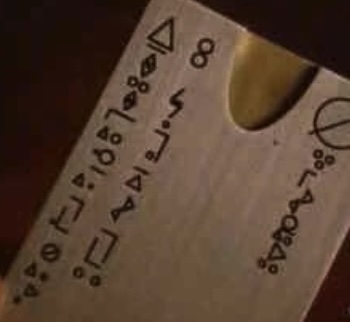
Smallville - Season 1
Smallville first aired in the fall of 2001, but it wasn’t until late in the first season, in the spring of 2002, that Kryptonian began appearing in the show. One of the primary appearances was the writing seen on the key to the ship that brought baby Kal-El to Earth (pictured). This prop is a good example of how Brewer’s font was used throughout Smallville’s run: The top side shows Kryptonian letters placed for visual effect — not words, but the letters “SM” (presumably for “Superman”). The bottom right shows a wholly original logographic symbol mimicking the aestetic and borrowing glyphs from Brewer’s font — this symbol was later revealed to mean “hope”. The bottom left side is the word “BARCODE” written with Brewer’s font. Interestingly, this prop was seen in all ten seasons except for season six.
The “Heart” of Kal-El’s ship also appeared late in Season 1 (pictured), but featured geometric shapes and lines for Kryptonian, obviously unrelated to Brewer’s font. This prop received a facelift for season 2, getting a new shape and featuring actual Brewer Kryptonian indicating that the proliferation of the Brewer font was likely an ongoing process early in the show’s production. This combination of sometimes-readable, sometimes-logographic, sometimes-just-visual use of Kryptonian was a hallmark throughout the show’s run.
2003
Smallville - Seasons 2-3
Season 2 (2002-2003) saw the most legible uses of Brewer’s font, with episode 17, “Rosetta” (Feb 2003), being one of the most Kryptonian-heavy episodes of the entire series and also a perfect microcosm of Smallville‘s Kryptonian usage overall. The episode focus-[’/es on Clark learning about his Kryptonian heritage, this being paralleled in his human life with a school family tree project.
Early in the episode, we are given a glimpse of Clark’s doodles on his family tree worksheet which features various Brewer glyphs alongside other Brewer-like symbols — an instance of visual over substance.
Later, with a guest appearance by Christopher Reeves as Dr. Virgil Swann, Clark is shown the message sent by his birth parents — a very readable usage of Kryptonian. Notably, even in this, alternating lines of text are written normally, and then flipped (mirrored).
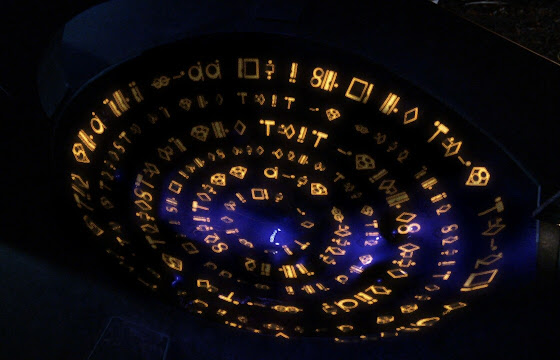
At the climax of the episode, Clark opens the ship that brought him to Earth to reveal another message which is displayed in concentric nested circles (pictured). The message written in Brewer’s font is indeed what the character reads aloud on screen. However, as the circles get smaller, letters, and then whole words, start getting dropped for spacing, with visuals taking priority over accuracy. The smallest ring in the center reads: “Made in Taiwan,” another fun Easter-egg which the production crew would place from time to time.
Doyle’s Language
,suprmAn,Orthography
Logo-Alphabetic:
- 35 alphabetic characters
- 38 logographic characters
- 1 Diacritic for vowels
- 9 vowel ligatures
- 11 digits
- Basic math symbols
- Punctuation unique to Kryptonian
Language
- Fully constructed language
- Verb-Subject-Object (VSO) with strict word order
- Postpositional with particles and synthetic features
- Lexicon of 1000+ words
Darren Doyle
It was Smallville’s Kryptonian boom — specifically the “Rosetta” episode — that pushed me (Darren Doyle) to start building an actual language starting 2003. At first, the idea was just to imagine what a full alphabet (rather than just a cipher) supporting a real language might look like. The first step was to reimagine Brewer’s font into something more practical — removing unnecessary or ambiguous characters, and adding others, but with the ultimate goal of incorporating as much of the Kryptonian canon as possible, things got more complicated quickly.
Logographic elements were added thanks to Smallville. Comic book characters’ mentions of Kryptonian being nearly impossible to learn led to a deliberate increase in phonetic and grammatic complexity that also had to be supported by the writing. Ideas about the culture of Krypton pushed design decisions and innovations, such as an extensive set of vowel ligatures or a base-ten number system with unique digits for 0-10 (zero remains distinct, while the digit for 10 doubles as both the number ten and a positional placeholder).
Ultimately, the writing system ended up as an alpha-logographic design. It is similar to Japanese, but flips the pattern: instead of logographs for roots and syllabary for grammar elements like verb conjugations, Doyle’s Kryptonian uses phonetic characters for roots and logographs for grammar elements like affixes, particles, and pronouns. Rather than building upon Brewer’s font, I recreated each letter — some with more alteration than others — to balance glyph heights, stroke widths, and other factors, to make a font more broadly self-consistent. It is both recognizably the “same” underlying alphabet, but also unique with a much-expanded inventory. Many of the design decisions were driven by the goal of ensuring that the orthography could be reliably hand-written — removing dependency on line widths and exact dot placement for letter distinctions.
The language’s rigid VSO structure aligns with a precise, ordered grammar for a science-driven culture. The lexicon aligns with both a deep patriarchal history based on canonical naming conventions, and a strongly egalitarian society. For example, daughters inherit their father’s full name, e.g., Kara Zor-El is the daughter of Zor-El, while sons inherit only their house name, e.g., Kal-El is the son of Jor-El. At the same time, in a language that indicates natural gender in its morphology, the neutral gender is the default.
Phonetically, the language also reflects the underlying “difficult for English-speakers” directive — a decision, it must be pointed out, which makes it a difficulty for stage and screen. The phonetic complexity also results in a language that can sound very different to different people or in different contexts, another decision that can stymie directors looking for a particular “feel.” One example of this complexity is the language’s overloading of rhotic sounds: rhotic vowels like the “or” in “Jor-El” or “Zor-El”, the alveolar approximate of English’s “R”, the alveolar trill of Spanish’s rolled “R”, the uvular trill like Afrikaans’ “brei”, and something akin to the voiced alveolar raised trill found in Czech — all of which are phonemic.
After a somewhat slow start, the bulk of the language was finalized in 2006 when I returned to UT Austin where I earned a BA in linguistics (and a BA in music, for whatever that’s worth).
s House of El
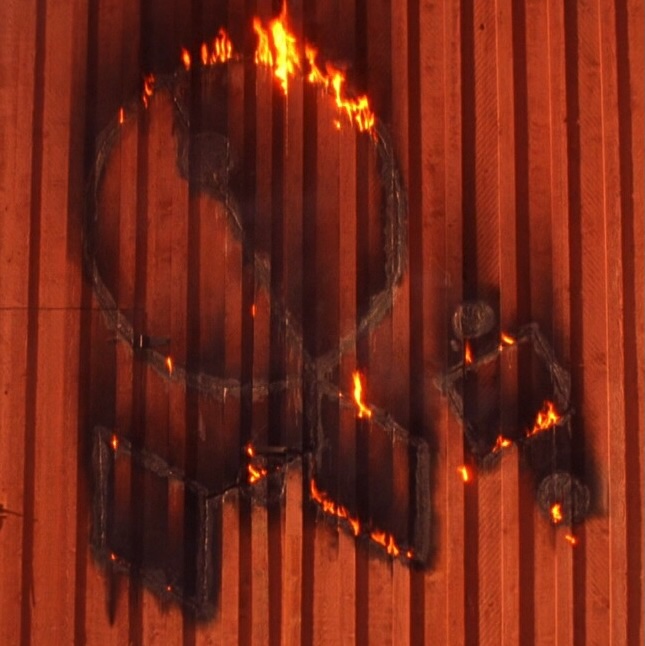
At the end of season 2 of Smallville, episode 23 “Exodus” (May 20), we see Brewer’s “S” s symbol burned into Clark’s chest and later identified as “The Mark of El,” specifically equating Brewer’s alphabet glyph with the more familiar S-shield ş. The show would continue to use this symbol to represent the El house, not transitioning to the S-shield ş until the first episode of season 6 three years later.
In September of 2003, Mark Waid’s Superman: Birthright was released. It leaned heavily into the idea of the S-shield ş being a family crest, picturing not only the El crest, but several other family crests throughout Kryptonian environments. In addition to the S-shield ş, there are panels depicting the El crest using Brewer’s “S” s, further solidifying the idea that the two symbols were interchangeable.
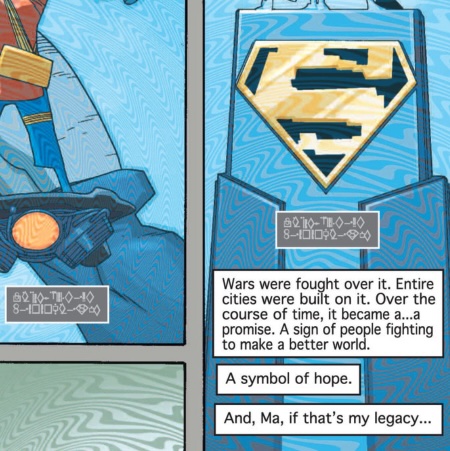
ş Hope
Superman: Birthright also introduced the concept that the S-shield ş was not only a family crest, but had come to symbolize “Hope” through the actions of the house of El, firmly establishing the idea that the House of El, Superman’s biological lineage, was itself a force for good throughout Krypton’s history. Smallville later borrowed this concept and slowly transitioned away from its own “hope” logograph to eventually align with the comic’s use of the S-shield ş as the primary symbol for “hope” while not entirely abandoning their own symbol.
2004–2005
Smallville - Season 4
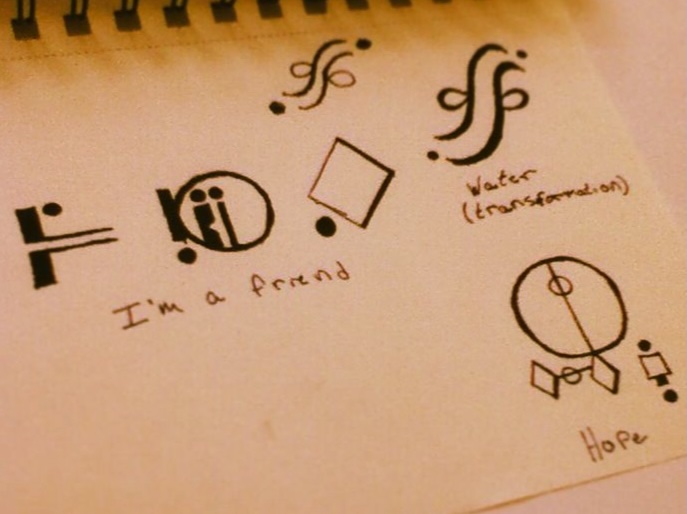
Throughout the rest of its run, Smallville increasingly shied away from readable uses of the Brewer font, often opting for more illegible renditions presented as writing, looking like Brewer’s font, but lacking meaning and using obvious alterations and additions to the glyph set. The showrunners also leaned into the logographic elements of Kryptonian which were intricately tied to a significant plot arc in season 4 (2004-2005) involving the logographs for water, fire, and air with air being Brewer’s “S” s. It is later revealed that the house of El adopted this “air” symbol as their house crest, and over the centuries it evolved into the S-shield ş of Jor-El’s time. This idea of the crest also meaning “air” has remained unique to Smallville.
2007
Smallville - Season 7
In a single scene in season 7, episode 9, “Gemini” (December 2007) the character Casey Brock, infected with Brainiac, is heard mumbling in a fugue state what is identified as Kryptonian. This theoretically marks the first attempt at a spoken Kryptonian on screen, but there was no underlying language, and the mumbling is so severe and brief as to be completely unintelligible.
2009
Superman/Batman: Apocalypse
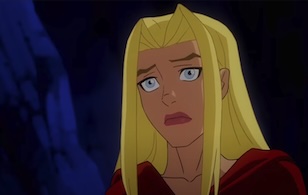
In the animated film Superman/Batman: Apocalypse, there are multiple scenes where Supergirl is heard speaking Kryptonian. This is not a constructed Kryptonian language, rather it is Esperanto with minor alterations to make it sound more “alien.”
2013

Schreyer’s Language
Orthography
Abugida:
- 22 base characters for consonants
- 4 orientations + 3 ornaments indicate vowel
- 10 digits — all designed to fit within S-shield outline
- Swirling, ornate aesthetic inspired by “no straight lines” directive and S-shield shape
- Abugida writing system inspired by Cree syllabics
Language
- Fully constructed language
- Subject-Object-Verb (SOV) word order
- Lexicon of 300+ words
Dr. Christine Schreyer — Man of Steel — DCEU
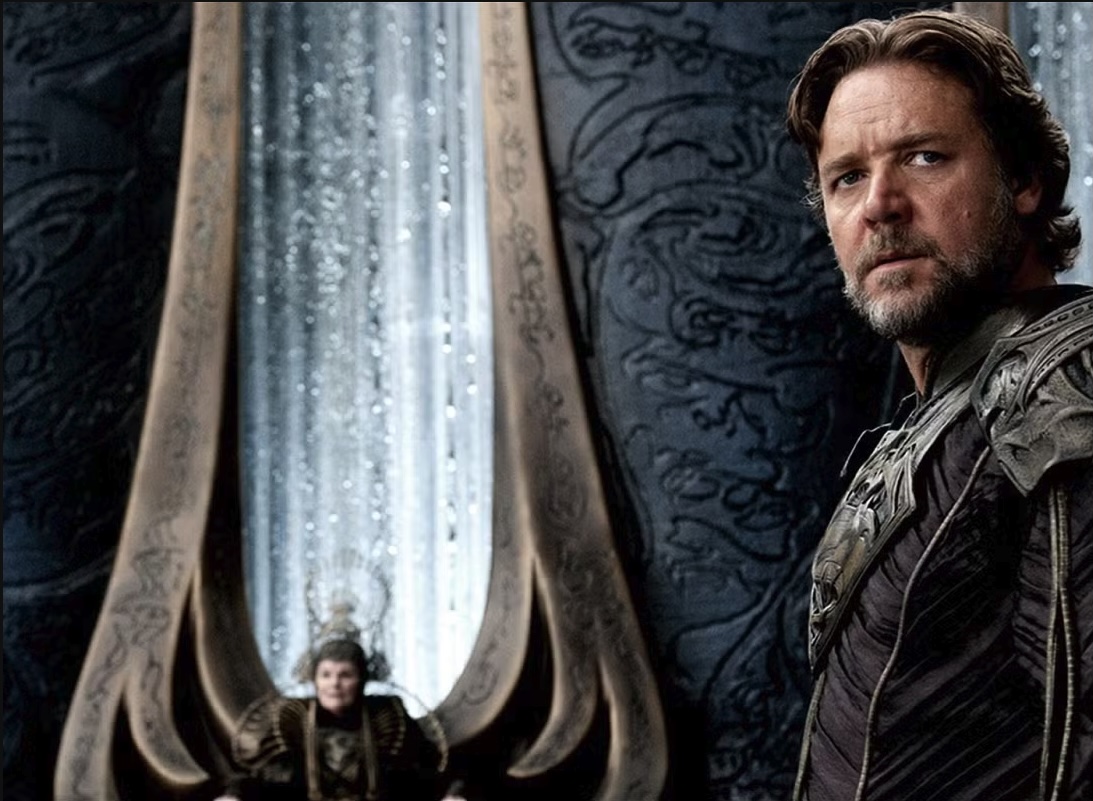
While filming Man of Steel in British Columbia, production designer Alex McDowell hired Dr. Christine Schreyer, linguistic anthropology professor at UBC Vancouver, to create a conlang and a script that fit the film’s already well-developed visual world. Schreyer worked closely with Helen Jarvis (art director) and Kirsten Franson (graphic designer) to design the aesthetic for the language’s abugida writing system inspired by Cree syllabics. Citing the Kryptonians depicted in the film — at the selfish, slothful end of their civilization — as being overly attached to “things,” she chose the noun-first SOV word order placing action last.
Crucially, although Schreyer developed a speakable language, production realities and directorial decisions prevented it from being spoken on screen. Instead, the writing system designed by Schreyer and realized by Franson was used extensively in sets, props, and even on the opening studio logo graphics. As an example, you can see the writing written all over the walls in the related image. That aesthetic — Kryptonian writing everywhere — helped inspire another cultural detail of Krypton which was later mirrored in episodes of the TV show Krypton.
Brewer’s Alphabet Revived
Also in 2013, while rebuilding this website in anticipation of Man of Steel’s release, Darren Doyle (me) undertook a side project to use the low-res screenshots released by Turniansky to recreate Bridwell’s alphabet as a clean, natural-looking, vector font — not a cipher mapped to English, mind you, but just a faithful digital set of Bridwell’s symbols. After painstaking effort, the font was posted in 2013 as a free download on this site.
2015
Supergirl - Season 1
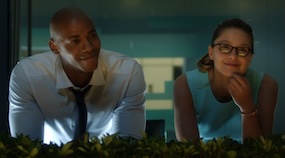
In episode 2 of season 1, “Stronger Together” (November 2015), in a conversation with James Olsen, Kara reflects that the S-shield ş is not only the El family crest, but represents the motto of the house of EL which she states as “el mayarah” in Kryptonian, and translate the phrase as “stronger together.” This phrase is not from any Kryptonian language — and appears to be just a single, writer-invented phrase given an English gloss. The concept of “stronger together” also appears to be a detail limited to Supergirl.
NOTE: From a linguistic perspective, the phrase “el mayarah” could actually prove to be somewhat problematic as long-standing canon sets the meaning of “el” as “star.”
2016-2017
Batman v Superman (2016)
Justice League (2017)
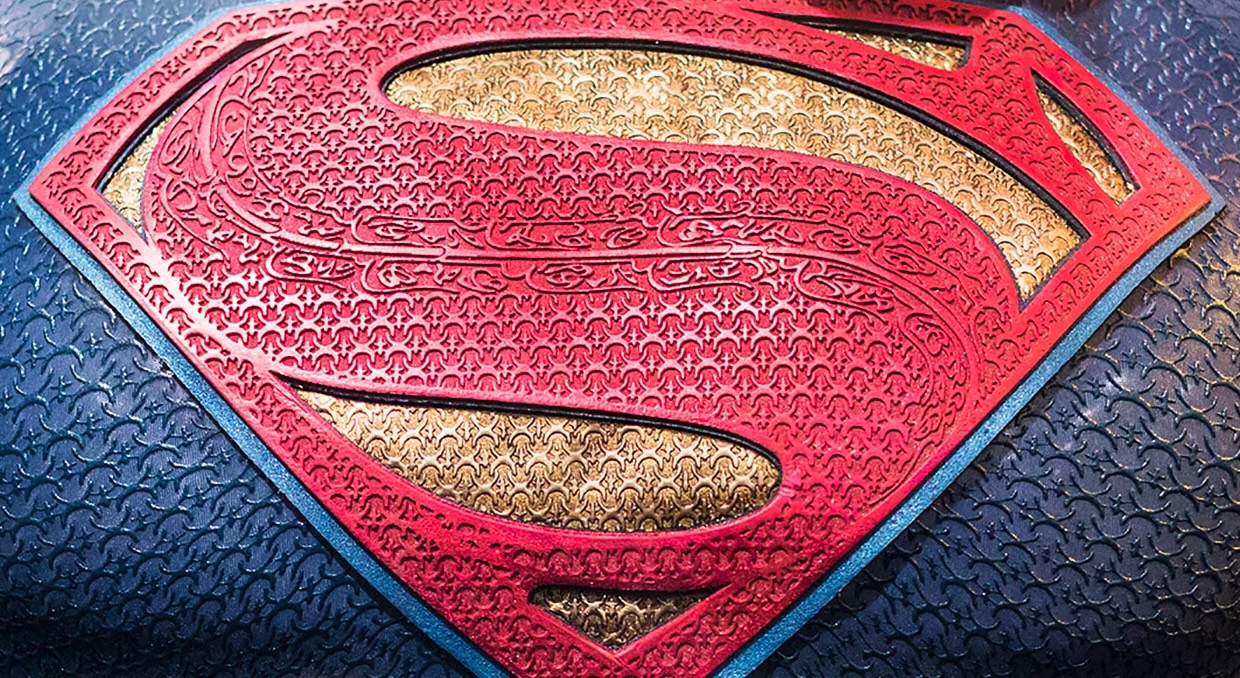
Schreyer’s participation in Man of Steel in 2013 came too late in the production process for her Kryptonian to be reflected on actual costumes, beginning in 2016’s Batman v Superman, DCEU films portrayed various Kryptonian phrases written on the S-shield Ş, belt, cuffs, and shoulders of Superman’s costume. This is, naturally, the same costume later seen in Zack Snyder’s Justice League (2021).
2017-2018
Supergirl - Season 3
In Supergirl season 3, episode 2, “Triggers” (October 2017), Melissa Benoist spoke Doyle Kryptonian in a scene, marking the first time any fully developed Kryptonian language appeared in official media. The dialog was incorrect in its grammar, just swapping Kryptonian words into English sentences, and struggled with the intentionally difficult phonetics — but the vocabulary was unmistakably my language. Additional, and similarly problematic, uses appeared in episodes 6, 7, and 13.
After first seeing my language appear in episode 2, I immediately set about trying to contact someone at the WB to offer my services so that the language could be portrayed accurately. Finally, after back-and-forth to finalize contract negotiations, WB consulted with me for actual translations on episodes 20 and 22 of season 3, and once more in season 5. Unfortunately, the bulk of the Kryptonian for the show was already committed without my guidance.
2018-2019
Krypton
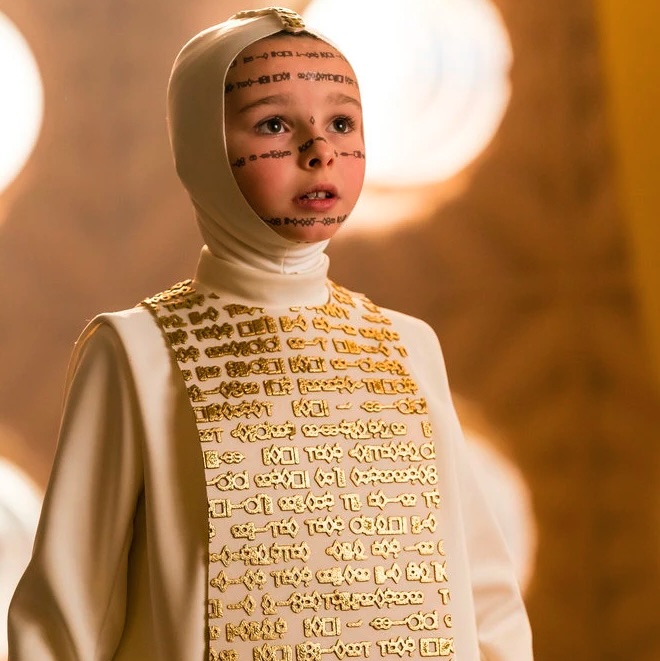
The SYFY series Krypton embraced the Brewer cipher and blanketed the environment with it: shop signs, plaques, street signs, graffiti, garments — in some episodes, the script even appeared covering characters’ clothes and bodies. The ubiquity of the writing at times hearkened back to Man of Steel’s near-ubiquitous use of Kryptonian across surfaces. It did not, however, introduce a spoken language; Kryptonian remained a visual element that fans could decode akin to the Aurebesh writing appearing in Star Wars media.
2021-2022
Superman and Lois - Seasons 1-2
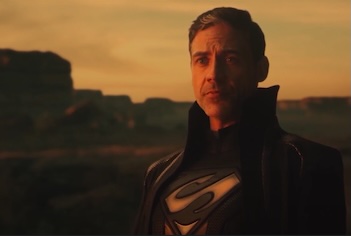
With the launch of their new show, Superman and Lois, also taking place in the “Arrowverse” as a more-or-less spinoff of Supergirl, WB once again contracted my services and ended up utilizing Doyle Kryptonian throughout season 1. Specific episodes including lines of Kryptonian dialog were 7, 9, 10, 12, 13, 14, and 15, with a couple of minor spots at the beginning of season 2. With my involvement from the start, the Kryptonian presented in Superman and Lois was grammatically accurate, and pronunciation was much improved over the attempts in the bulk of Supergirl. I must point out that Adam Rayner as Tal-Roh/Morgan Edge turned out a particularly good performance of his Kryptonian dialog.
2023
The Flash
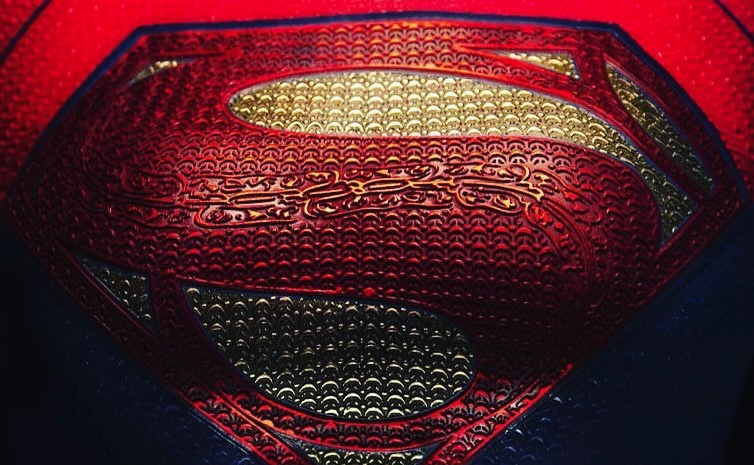
The Flash in 2023, as one of the last films in the DCEU, featured Supergirl in place of Superman in a time-travel initiated re-envisioning of the battle with General Zod from Man of Steel. Supergirl’s costume appropriately matched the established Kryptonian aesthetic of the DCEU featuring unique Kryptonian phrases written on Supergirl’s suit akin to what was seen on Superman’s suit in Batman v Superman and Justice League.
My Adventures with Superman - Season 1
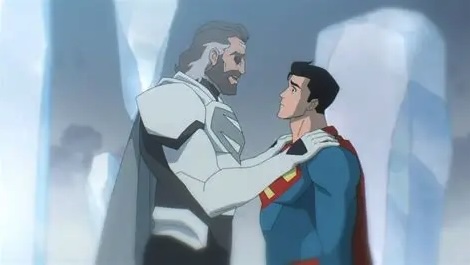
In the streaming series My Adventures with Superman, Jor-El’s hologram first attempts to communicate with Clark solely in Kryptonian. Here, like its animated predecessor, Superman/Batman: Apocalypse, Kryptonian is represented by slightly altered Esperanto. This use is limited to the first two episodes in season 1; by the first episode of season 2, Jor-El had learned English.
In an interview, show writer Josephine Campbell — referring to the language as “Kryptonese” — claimed that when asked, DC’s representative, Mike Carlin (since retired), told her there was “no official language” for Kryptonian — which is, I suppose, technically true from a comics-only standpoint. However, she ties this pronouncement to the statement that “nobody else has done this” referring to the depiction of spoken Kryptonian. She then goes on to claim invention of the use of modified Esperanto as a stand-in. It’s possible that she did, in fact, come up with modified Esperanto on her own, but the fact that this method had already been used in a prior DC animated work, not to mention the two separate constructed languages already used in the DCEU and Arrowverse, makes it hard to believe that she wasn’t aware of their existence.
2023-2024
Doyle Kryptonian in Comics
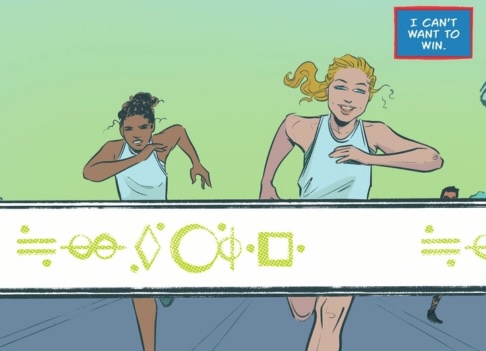
In December 2023, in a panel of Supergirl Special #1, DC included a single word of Doyle Kryptonian rather than the more common English presented via cipher. It showed the single word, /ewuhshehd/ (“finish”), written in Doyle’s own Kryptonian writing system — distinguishable from Brewer’s cipher via two characters only present in the Doyle orthography. This marks the induction into canon, not only of Doyle’s language, but its supporting orthography.
Bridwell Kryptonian in Comics
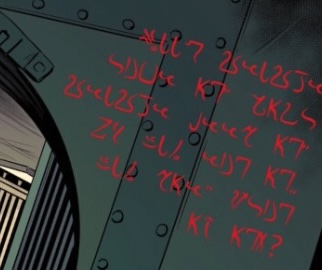
In 2023, Doyle’s reconstruction of the Bridwell Kryptonese font began appearing in DC Comics beginning with Batman/Superman: World’s Finest #18 in August, and heavily featured in Action Comics #1070 (October 2024). DC has used the font merely as a cipher, typing English without regard to Bridwell’s sound assignments or actual keyboard mappings, but nonetheless it marks the first time Bridwell’s alphabet has seen publication. Thus, after a more than 60-year chain from DC to Bridwell to Turniansky to Doyle and back to DC, Bridwell’s alphabet — what started it all — is finally actual canon to the Superman mythos.
2025
Petersons’ Language
Orthography
ABUGIDA: “GWAZAKS ANKRIPTON”
- 27 base consonants
- 5 vowel variants each
- 135 characters total
Language
- Fully constructed language
- Subject-Verb-Object (SVO) Word order
- Inflectional / fusional morphology
- Lexicon of 100s (?) of words
David & Jessie Peterson — Superman — DCU
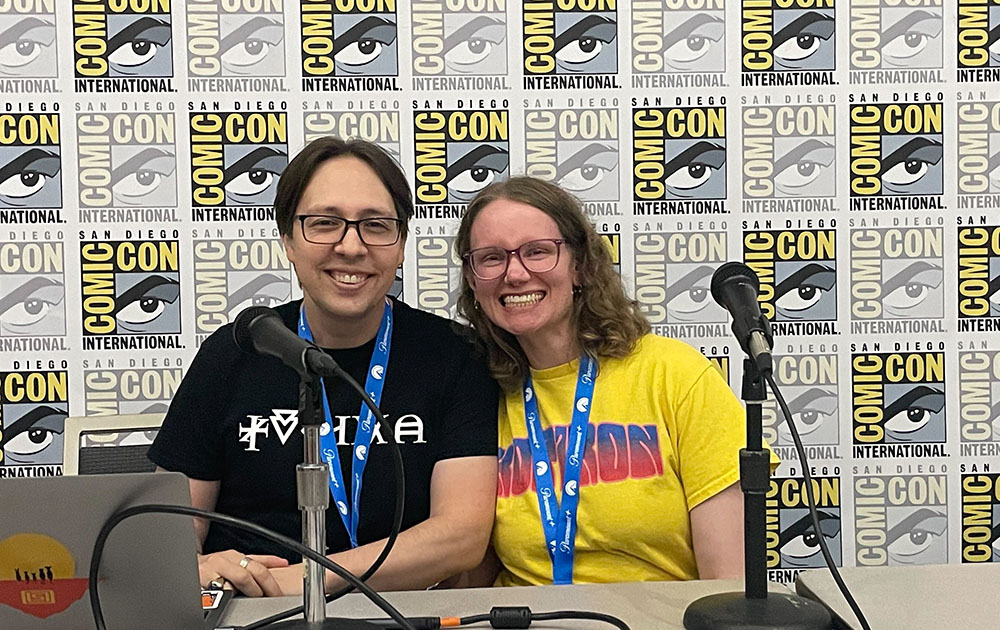
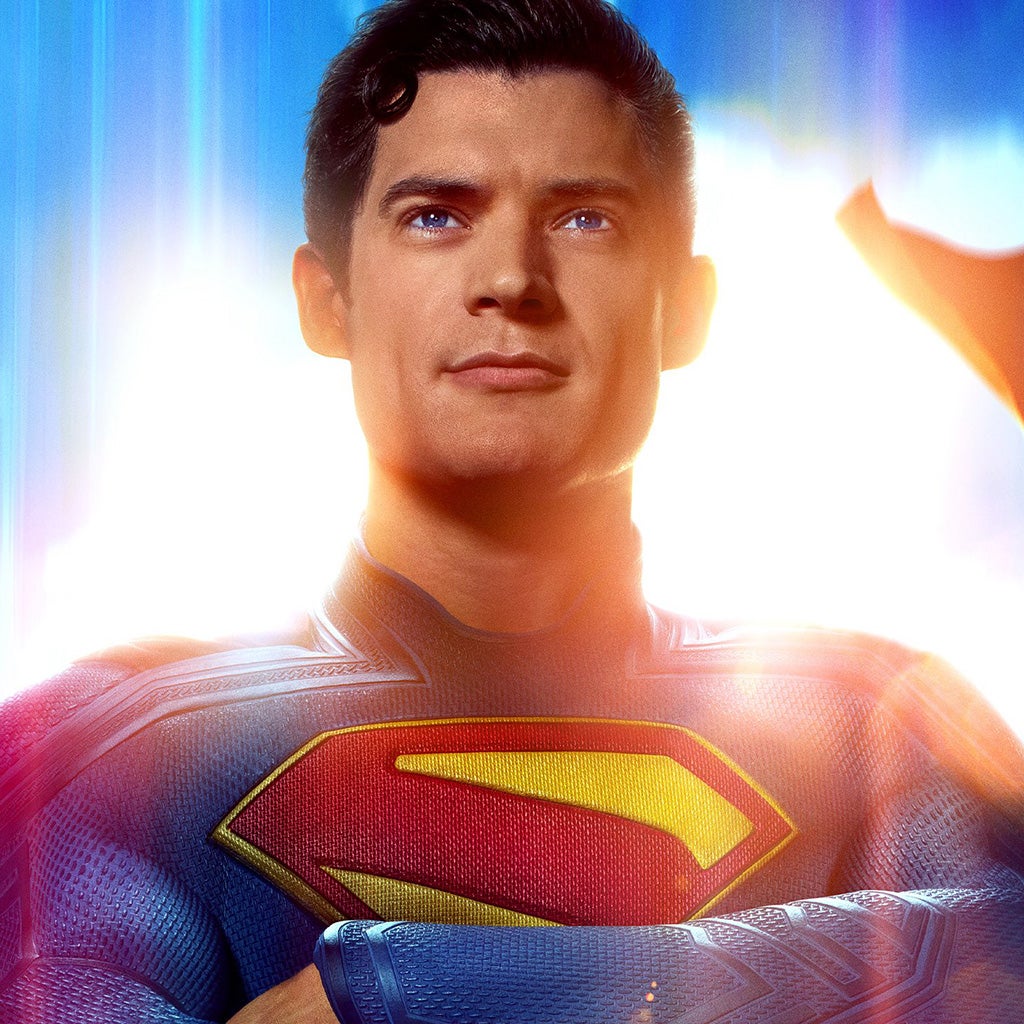
For the film Superman (2025), prolific conlangers David J. Peterson and wife Jessie Peterson were commissioned by director James Gunn to craft a new Kryptonian language. They dubbed the new language “Suh Ankripton” and created an accompanying abugida. Unlike Schreyer’s or Doyle’s work where time and production limitations relegated usage to set dressing or occasional simple dialog, the Petersons’ Kryptonian is central to the plot of the 2025 film — a story beat that depends on Kryptonian being a real, and translatable, language. With future projects like Supergirl and Man of Tomorrow currently in production, chances are high that we will be seeing a lot more of this version of Kryptonian in the near future. The Petersons’ Kryptonian orthography can be seen in a few short sequences on some computer screens in the Fortress of Solitude.
2026
Supergirl — DCU
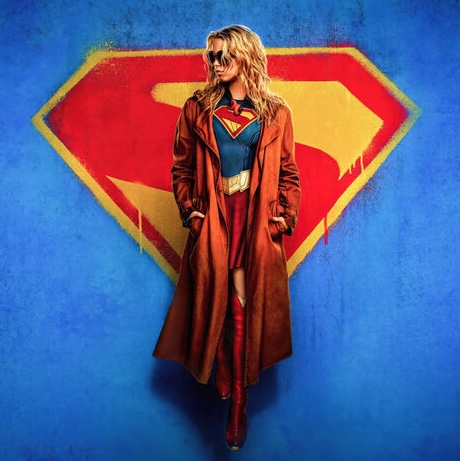
The film Supergirl, released in June of 2026, made more extensive use of the Petersons’ Kryptonian than the previous year’s Superman. It featured several extended sequences depicting Krypton, Argo City, Kara Zor-El, Zor-El, and Alura In-Ze in which all dialog was presented in Kryptonian with English subtitles. However, little, if any, Kryptonian writing was seen in the film.
2027
Man of Tomorrow — DCU
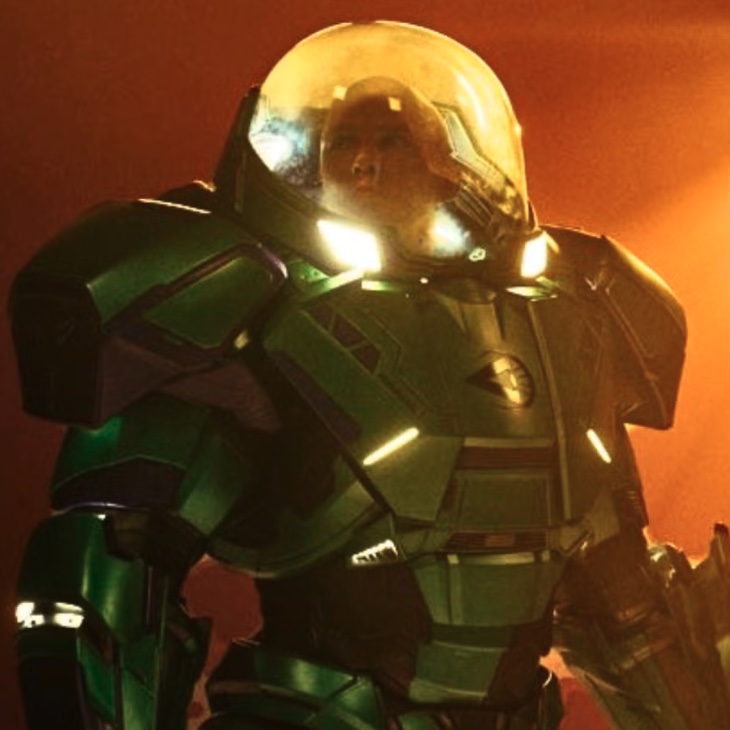
The next DCU film to feature Superman is Man of Tomorrow. It is currently in production and slated for release in the summer of 2027. Whether we will get any further depictions of Krypton, the Fortress of Solitude, or the Kryptonian language is still undetermined, but seems likely given James Gunn’s confirmation that the film will involve Braniac.